

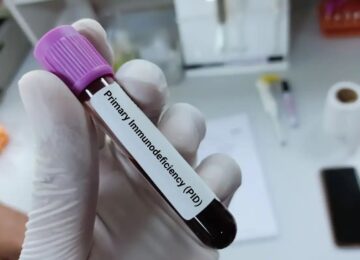
About Primary Immunodeficiency
Primary immunodeficiencies (PIDs) are a genetically heterogeneous group of diseases. The International Union of Immunological Societies Expert Committee categorizes PIDs into nine different categories:
- combined immunodeficiencies
- combined immunodeficiencies with associated or syndromic features
- predominantly antibody deficiencies
- diseases of immune dysregulation
- congenital defects of phagocyte number, function, or both
- defects in intrinsic and innate immunity
- autoinflammatory disorders
- complement deficiencies
- phenocopies of PIDs.
Despite a heterogeneous genetic basis, the core symptoms are often very similar complicating the diagnosis. In addition, many PIDs may be included in more than one category. Treatment choice without knowing the specific mutation in the causative gene may therefore be complicated. Also, type and site of and specific organisms causing the infections may help to classify the disease.
In addition to immune-related symptoms, many PIDs have non-immune manifestations. The prevalence of individual PIDs have a wide range, but the combined prevalence of all primary immunodeficiencies is reported to be as high as 5-8:10,000. Some recently identified PIDs are extremely rare.
Who is this test for?
This panel may be appropriate for anyone who has a personal or family history of frequent infections, fevers, allergies, certain malignancies or rash, particularly if infections are recurrent and difficult to treat, require hospitalization or IV antibiotics, or are caused by an uncommon organism.
What are the potential benefits fo patients?
This panel can help confirm a diagnosis and guide the course of treatment. Patients with immunodeficiency can take precautions to prevent infection. Diagnosis through genetic testing can help with the development of a management plan.
Genetic testing for primary immunodeficiency disorders can:
- Establish or confirm the appropriate diagnosis
- Identify risks for additional related symptoms
- Assist in modifying lifestyle changes
- Result in more personalized treatment and symptom management
- Inform family members about their own risk factors
- Connect patients to relevant resources & support
- Provide options for family planning
What causes Primary Immunodeficiency?
- Genetic Mutations: Over 400 different types of PI are caused by specific genetic defects. These, often inherited from one or both parents, affect the production or function of immune cells (B cells, T cells, or phagocytes) and complement proteins.
- Inheritance Patterns: PI can be inherited through autosomal recessive, autosomal dominant, or X-linked patterns. X-linked disorders are more common in males.
- Spontaneous Mutations (De Novo): Sometimes the genetic mutation is not inherited but occurs for the first time in the affected person, such as in a sperm or egg cell.
- Immune System Dysfunction: These genetic defects prevent the body from producing enough antibodies, creating functional immune cells, or having proper complement protein levels.